
How Can Parents Evaluate Teaching Quality During a School Visit?
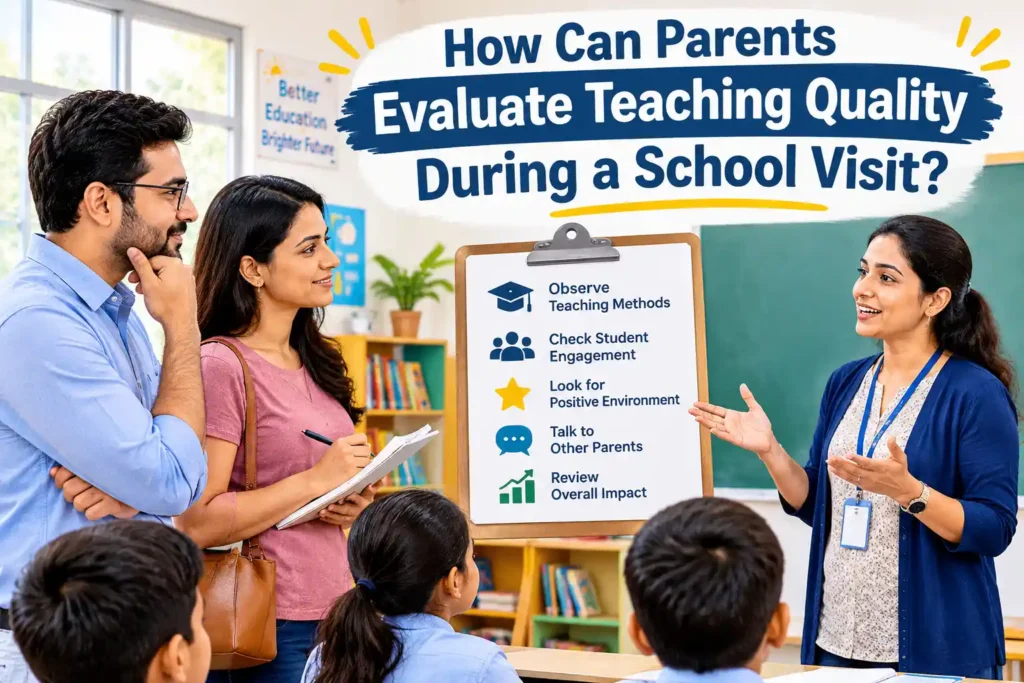
Choosing the right school involves more than comparing fees, facilities, or examination results. The quality of teaching directly influences how children understand concepts, develop confidence, and build lifelong learning habits. When visiting CBSE Schools in Thane, parents should observe classroom practices, teacher-student interactions, lesson delivery, and the support available to students with different learning needs. A well-planned school visit provides valuable insights into whether an institution creates a positive learning environment where children feel encouraged to ask questions, explore ideas, and achieve their academic potential.
1. Observe Classroom Teaching Methods at CBSE Schools in Thane
One of the most effective ways to evaluate teaching quality is to understand how teachers conduct lessons. Good teaching involves more than explaining information from a textbook. It requires making concepts understandable, encouraging participation, and helping students apply what they learn.
During a school visit, ask whether parents can observe a classroom session or attend a demonstration lesson. Notice how teachers introduce topics, explain difficult ideas, and connect lessons with real-life examples.
An effective teacher adapts explanations to the students’ age and understanding. For instance, a Mathematics teacher might use visual examples to explain fractions, while a Science teacher may demonstrate a concept before asking students to solve related questions.
Parents should also observe whether lessons encourage independent thinking or depend entirely on memorisation. Students should have opportunities to explain their reasoning, participate in discussions, and ask questions without feeling uncomfortable.
The teaching approach should match the CBSE curriculum while supporting conceptual understanding, practical application, and age-appropriate academic progress.
2. Evaluate Teacher Qualifications and Subject Knowledge
Teachers need appropriate qualifications, subject knowledge, and professional skills to deliver effective lessons. However, academic credentials alone do not guarantee strong teaching performance.
During the visit, parents can ask about teachers’ educational backgrounds, relevant training, classroom experience, and opportunities for professional development. They should also understand whether teachers receive training in updated teaching methods, educational technology, and student assessment.
Subject knowledge is particularly important when students encounter complex concepts in Mathematics, Science, languages, and other subjects. Teachers should be able to explain topics clearly, address doubts accurately, and provide examples that make abstract ideas easier to understand.
Parents can ask how the school supports teachers when new curriculum requirements or teaching strategies are introduced. Regular professional development helps educators improve their classroom practices and respond to changing educational needs.
When comparing the Best CBSE Schools in Thane, consider how the institution maintains teaching standards rather than relying only on advertised qualifications. Consistent training, constructive feedback, and a commitment to improvement can contribute to a stronger educational experience.
3. Assess Student Engagement and Classroom Participation
A classroom can reveal a great deal about the quality of teaching. Students who participate actively, ask questions, and discuss ideas may be experiencing lessons that encourage curiosity and understanding.
During your visit, observe whether teachers involve students throughout the lesson or do most of the talking themselves. Look for opportunities for group discussions, problem-solving exercises, practical demonstrations, and individual responses.
A well-managed classroom does not necessarily have to be completely silent. Productive discussion, thoughtful questions, and collaborative activities can indicate that students are engaged in learning.
Parents should also notice how teachers respond when students provide incorrect answers. Supportive educators use mistakes as opportunities to explain concepts rather than embarrassing learners.
Student engagement can vary depending on age, subject, and classroom activity, so one observation should not determine the final decision. Instead, ask how the school generally encourages participation across different classes.
A positive classroom atmosphere allows students to develop confidence, communicate ideas, and gradually take responsibility for their own learning.
4. Understand How Teachers Support Different Learning Needs
Every child learns at a different pace. Some students understand a topic quickly, while others need additional explanations, practice, or alternative teaching methods.
Parents should ask how the school identifies learning difficulties and supports students who fall behind academically. Useful approaches may include remedial lessons, additional worksheets, individual guidance, small-group instruction, and regular progress reviews.
It is equally important to understand how teachers challenge students who grasp concepts quickly. Enrichment assignments, advanced exercises, independent projects, and subject-based activities can help these learners remain interested and motivated.
Inclusive teaching also involves recognising different communication styles, learning preferences, and accessibility needs. Teachers should create opportunities for every student to participate meaningfully.
When visiting the Top CBSE Schools in Thane, ask for specific examples of how educators support struggling students and encourage academic growth among advanced learners.
Parents should also find out how the school communicates learning concerns and whether teachers work with families to establish realistic improvement goals.
A school that recognises individual differences can help students progress without unnecessary comparison or pressure.
5. Review Assessment Methods and Feedback Quality
Assessment is an important part of teaching because it helps educators understand whether students have learned the material. However, effective assessment involves more than conducting examinations and assigning marks.
Ask how frequently teachers assess students and what methods they use. Depending on the grade and subject, these may include written tests, oral questions, projects, practical activities, presentations, and classroom assignments.
Parents should understand how teachers analyse results and use them to improve instruction. For example, if many students struggle with the same mathematical concept, a teacher may revisit the topic using a different explanation or additional practice.
Feedback should be clear, specific, and constructive. Instead of simply marking an answer incorrect, teachers should help students understand their mistakes and explain how to improve.
It is also useful to ask how academic progress is shared with parents. Regular parent-teacher meetings, progress reports, and timely communication can help families identify difficulties before they become more serious.
A strong assessment system focuses on learning and improvement, not just marks, rankings, or competition between students.
6. Examine Classroom Management and Teacher-Student Relationships
Classroom management influences how comfortably students can learn. Teachers need to maintain appropriate discipline while ensuring that children feel respected, supported, and confident enough to participate.
During a school visit, observe how teachers handle interruptions, disagreements, and students who need additional attention. Effective classroom management relies on clear expectations, consistency, and respectful communication.
Students should understand classroom rules without feeling intimidated. Teachers should address inappropriate behaviour fairly and avoid humiliating or threatening children.
Teacher-student relationships are equally important. When students trust their teachers, they may feel more comfortable asking questions, discussing difficulties, and seeking help with challenging subjects.
Parents can ask how the school addresses bullying, behavioural concerns, and conflicts between students. They should also understand whether teachers receive guidance in positive discipline and child protection.
A respectful classroom environment supports emotional well-being and helps children develop responsibility, cooperation, and self-confidence.
7. Check Teaching Resources and the Use of Educational Technology
Learning resources can strengthen teaching when they are used purposefully. During a school visit, parents should examine whether classrooms, libraries, laboratories, and digital learning facilities support the curriculum effectively.
Ask how teachers use these resources during lessons. A science laboratory, for example, should provide opportunities for students to understand concepts through suitable experiments. A library should encourage reading, research, and independent learning rather than serving only as a collection of books.
Digital boards, educational software, videos, and online learning platforms can make lessons more interactive. However, technology should complement the teacher’s explanation and student participation rather than replace meaningful instruction.
Parents should also consider whether learning materials are suitable for the students’ grade levels and whether resources are accessible to children who need additional support.
When exploring CBSE Schools Thane, look beyond the presence of modern equipment. Ask how frequently students use these facilities and how teachers connect them with lesson objectives.
The quality of learning depends on how effectively resources are used, not simply on how advanced they appear during a campus tour.
8. Ask the Right Questions During Your School Visit
A prepared list of questions can help parents gather useful information and compare institutions fairly. School representatives should be able to explain teaching practices clearly and provide practical examples of how the school supports student development.
Consider asking:
- How are teachers trained, evaluated, and supported professionally?
- How does the school identify and address students’ learning difficulties?
- What teaching methods encourage critical thinking and classroom participation?
- How often do teachers assess progress and share feedback with parents?
- How are homework, examinations, and additional activities balanced?
- What support is available for students who need academic or emotional guidance?
Parents can also request information about class sizes, teacher availability, lesson planning, and parent-teacher communication.
Educational information platforms such as Edu India News may help families explore school-related information, but details about teaching standards should be confirmed directly with the institution.
Whenever possible, speak with existing parents to understand whether the school’s stated teaching approach reflects their everyday experience. Combining classroom observations, direct questions, and parent feedback provides a more balanced assessment.
9. Compare Teaching Quality Before Making the Final Decision
After visiting several institutions, parents should compare their findings rather than relying on first impressions alone. Attractive buildings, impressive advertisements, and high examination scores do not necessarily reveal how effectively teachers support students in everyday lessons.
The Best CBSE Schools in Thane for your family should demonstrate a consistent commitment to clear instruction, student participation, fair assessment, and individual academic support.
Consider the child’s age, personality, learning preferences, and educational goals. Younger children may benefit particularly from patient explanations and engaging activities, while older students may need stronger subject expertise, examination guidance, and opportunities for independent study.
Parents should also evaluate the school’s communication practices and willingness to discuss concerns openly. A school that welcomes questions and explains its teaching approach transparently can make it easier for families to build a constructive relationship with educators.
Most importantly, use several indicators together. A single classroom observation or conversation cannot provide a complete picture of teaching quality, but consistent evidence across different areas can help parents make a more informed decision.
Conclusion
Evaluating teaching quality requires parents to look beyond school facilities and academic claims. When visiting CBSE Schools in Thane, focus on classroom instruction, teacher qualifications, student engagement, individual support, assessment practices, and the overall learning environment.
Ask practical questions, observe how teachers interact with students, and compare the evidence gathered from different schools. Choosing an institution with effective educators and a supportive classroom culture can help your child build strong academic foundations, develop confidence, and enjoy a more meaningful learning experience.
Frequently Asked Questions (FAQs)
- How can parents evaluate teaching quality during a school visit?
Observe teaching methods, student participation, classroom management, and the way teachers explain difficult concepts.
- Should parents check teacher qualifications?
Yes. Qualifications, subject knowledge, experience, and ongoing professional training are important indicators.
- Why is classroom observation useful?
It helps parents understand how teachers engage students and manage everyday learning activities.
- How can parents assess individual student support?
Ask about remedial classes, personalised feedback, enrichment activities, and progress monitoring.
- Are examination results enough to judge teaching quality?
No. Teaching methods, student well-being, classroom engagement, and consistent academic progress also matter.
